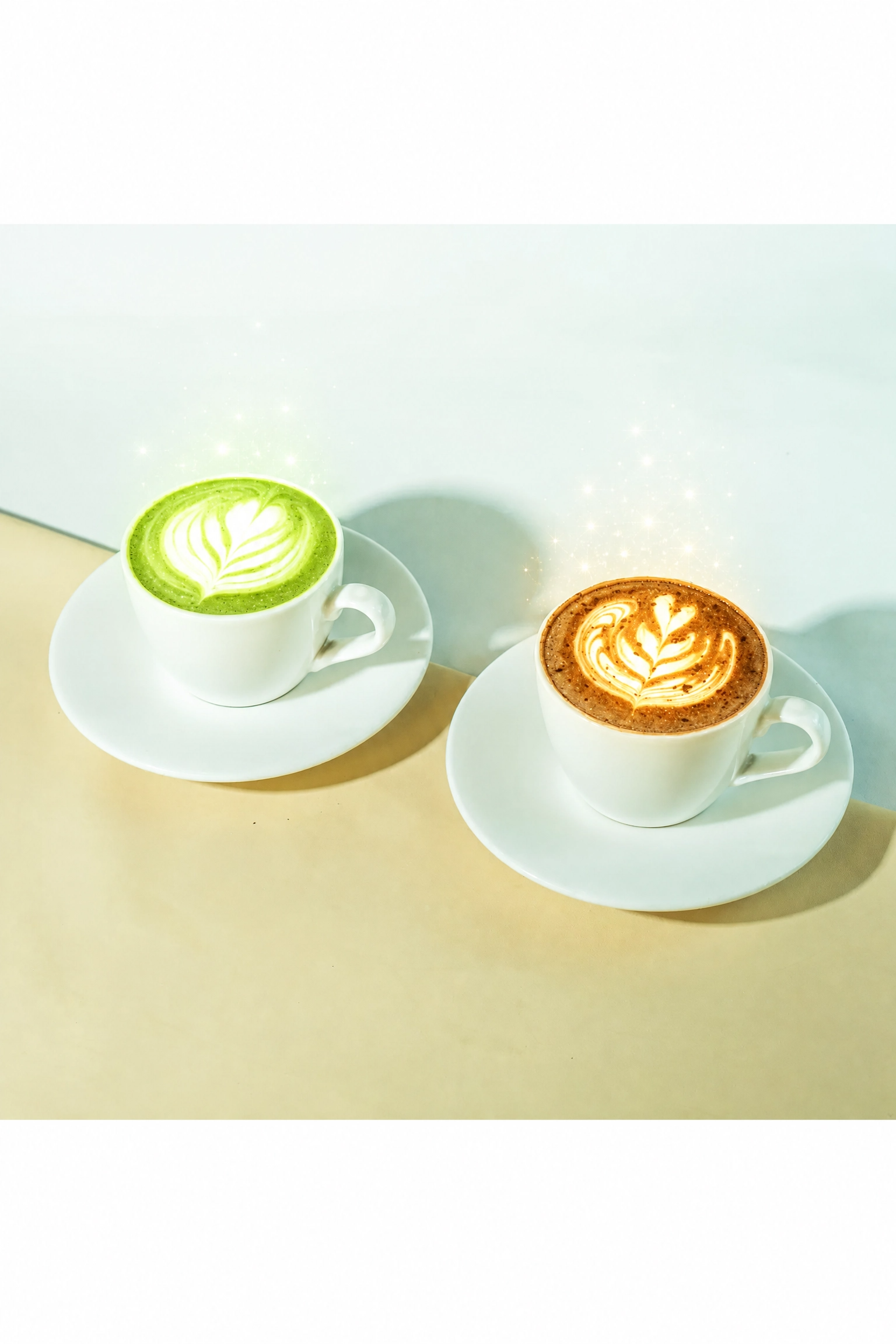
If you’ve ever noticed that coffee makes you feel sharp but slightly tense, while matcha feels calm but focused, there’s a reason for that.
This difference is not just preference.
It is how stimulation interacts with the nervous system.
Coffee pushes alertness harder. Matcha supports it more steadily.
Coffee vs Matcha in the Body
Coffee and matcha both contain caffeine, but they affect the body in different ways.
Coffee produces a faster rise in stimulation. Matcha releases caffeine more gradually and is paired with compounds that soften its impact.
The result is two different patterns of alertness: sharp activation versus steady activation.
Why They Affect the Nervous System Differently
The difference comes from how stimulation is processed in the brain:
- caffeine blocks tiredness signals
- coffee is absorbed more quickly
- matcha contains L-theanine
- L-theanine is associated with steadier attention
- stress increases sensitivity to stimulation
- poor sleep amplifies caffeine response
Together, these shape how intense or smooth alertness feels.
What Coffee Does to the Nervous System
Coffee creates a rapid increase in alertness.
This often feels like:
- fast mental activation
- increased drive and urgency
- stronger focus onset
But under stress or fatigue it can also feel like:
- tension
- racing thoughts
- overstimulation
What Matcha Does to the Nervous System
Matcha produces a slower, more stable rise in alertness.
This often feels like:
- smoother focus
- lower jitter response
- steadier attention
It supports alertness without a sharp internal shift.
What It Feels Like in Daily Life
In practice, the difference shows up clearly:
- coffee feels immediate and strong
- matcha feels gradual and smooth
- coffee can feel more stimulating
- matcha can feel more stable
- coffee may increase urgency
- matcha may support sustained attention
Neither is better. They are different stimulation profiles.
Quick FAQ
What is the difference between coffee and matcha?
Coffee creates faster, sharper stimulation while matcha creates a slower and steadier form of alertness.
Why does coffee feel stronger than matcha?
Because it is absorbed more quickly and creates a faster rise in stimulation.
Why does matcha feel calmer?
Because it contains compounds that support steadier attention and reduce jitter response.
Why does caffeine feel different depending on the day?
Because stress, sleep, and mental load change how sensitive the nervous system is to stimulation.
Final Thought
Coffee and matcha are not opposites. They are different forms of stimulation.
Coffee tends to feel sharper. Matcha tends to feel steadier.
That is why the same moment can feel very different depending on which one you reach for.