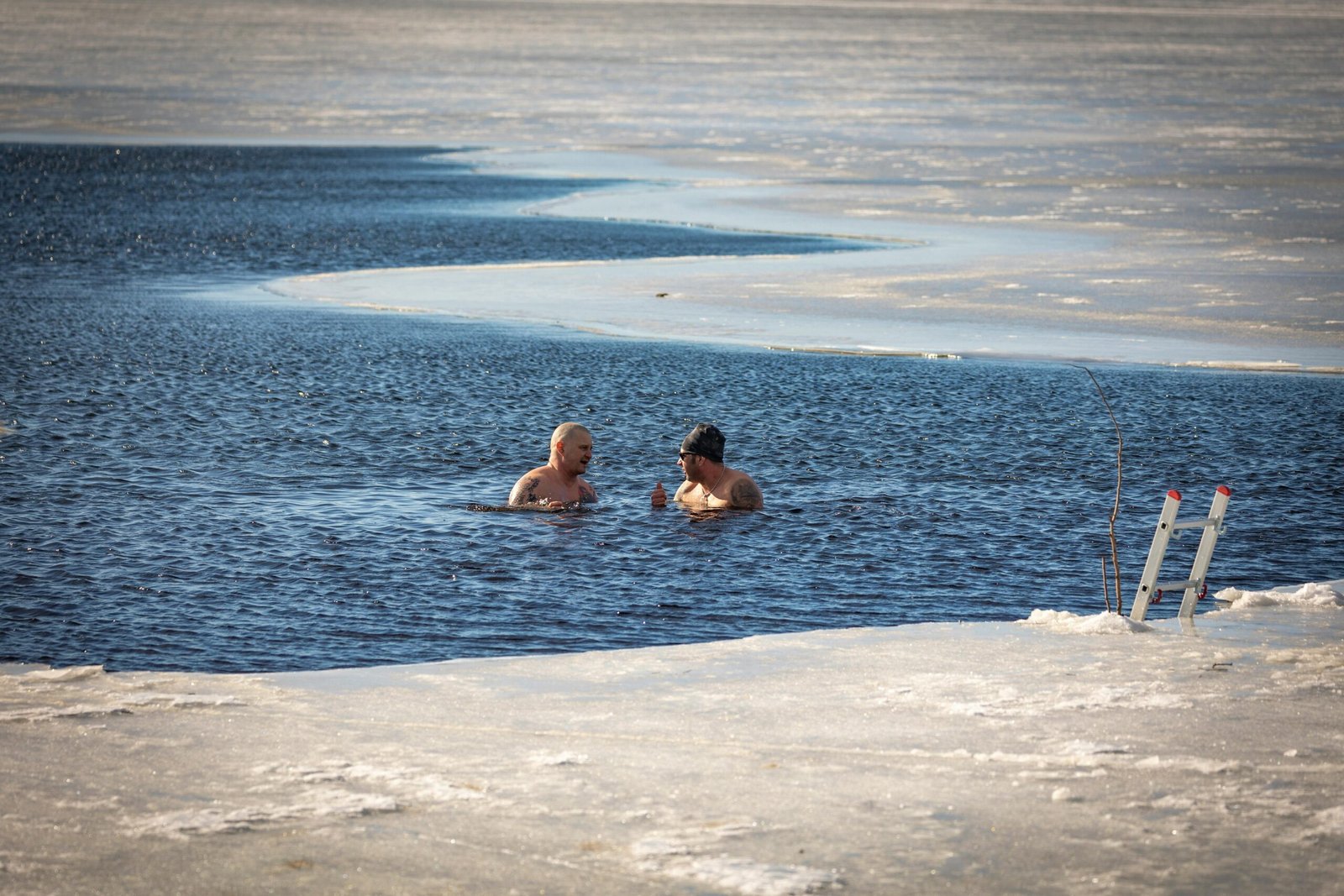
An ice bath creates a strong physical stress response almost immediately.
Cold water changes breathing, circulation, muscle tension, and nervous system activity within seconds.
For most people, the first experience feels less like “recovery” and more like shock.
What happens afterwards is the nervous system trying to adapt to that sudden change in environment.
What happens when the body hits cold water?
The body reacts to cold as a survival signal.
As soon as you enter cold water:
- breathing speeds up
- heart rate increases
- blood vessels narrow
- muscles tense automatically
This is part of the body’s immediate stress response.
The nervous system shifts rapidly into a more alert state to deal with the sudden drop in temperature.

Why breathing becomes difficult at first
One of the first things people notice is the breathing response.
Cold water often triggers:
- rapid breathing
- short breaths
- a feeling of panic or urgency
This happens automatically. The nervous system is reacting before conscious control fully catches up.
After the initial shock, breathing usually begins to slow again as the system adjusts to the environment.
What happens after getting out
Once the cold exposure ends, the body starts trying to return to balance.
People often notice:
- warmth returning gradually
- increased alertness
- elevated mood
- tingling in the skin
- lingering physical activation
For some, this feels energising. For others, it can feel physically draining at first.
Why people often feel more awake afterwards
Cold exposure increases activity in systems linked to alertness and stimulation.
After leaving the water, many people notice:
- sharper attention
- increased energy
- reduced mental fog
Part of this comes from the nervous system moving into a highly activated state during the exposure itself.
The contrast between cold stress and returning warmth can also make the body feel more alert afterwards.
What happens to stress regulation
Ice baths are unusual because they combine stress with control.
The body experiences:
- discomfort
- cold shock
- increased activation
But the environment is still safe.
Over time, this can help some people become more familiar with the feeling of physiological stress without immediately reacting to it.
The important part is not “forcing calm,” but learning how the system behaves under controlled stress.
Why the first experience can feel overwhelming
For some people, the first ice bath feels mentally intense.
Common reactions include:
- wanting to get out immediately
- difficulty staying still
- racing thoughts
- feeling overstimulated afterwards
This doesn’t necessarily mean something is wrong. Cold exposure places the nervous system under a sudden load, especially if the body isn’t used to it.
What changes with repeated exposure
With repeated exposure, people often notice:
- less panic during entry
- more controlled breathing
- faster adaptation to the cold
- reduced shock response
The body still recognises the cold as stress, but the nervous system becomes more familiar with the experience.
What this means in modern life
Most modern stress is psychological:
notifications, work pressure, constant cognitive input.
Cold exposure is different. It is immediate, physical, and temporary.
For some people, this creates a clearer relationship with stress because the body experiences:
- activation
- adaptation
- recovery
in a very direct way.
Final thought
An ice bath is not simply about cold.
It’s about how the nervous system responds to controlled stress.
The first experience often feels intense because the body reacts automatically.
What changes over time is not the cold itself, but how the system learns to move through it.